


SQL & Relational Databases
Ask better questions of your data.
SQL is one of the most valuable skills in tech, used by developers, analysts and data engineers every day. This course teaches you to write clear, correct queries, design normalised schemas and make databases fast.
You'll practise on realistic business datasets from the first session, progressing from simple selects to window functions, transactions and query tuning. It's equally useful for aspiring developers and analysts.
Enroll nowWhat You'll Learn
Practical skills taught through real projects, reviewed by mentors who use them at work every day.
Querying Data
SELECT, filtering, sorting and aggregate functions written clearly and correctly.
Joins & Relationships
Inner, outer and self joins, and how relational tables fit together.
Analytical SQL
Subqueries, CTEs and window functions for reporting and analysis.
Schema Design
Keys, constraints and normalisation, so your data stays consistent.
Transactions & Integrity
ACID, isolation levels and keeping data correct under concurrency.
Performance
Indexes, EXPLAIN plans and rewriting slow queries.
Curriculum
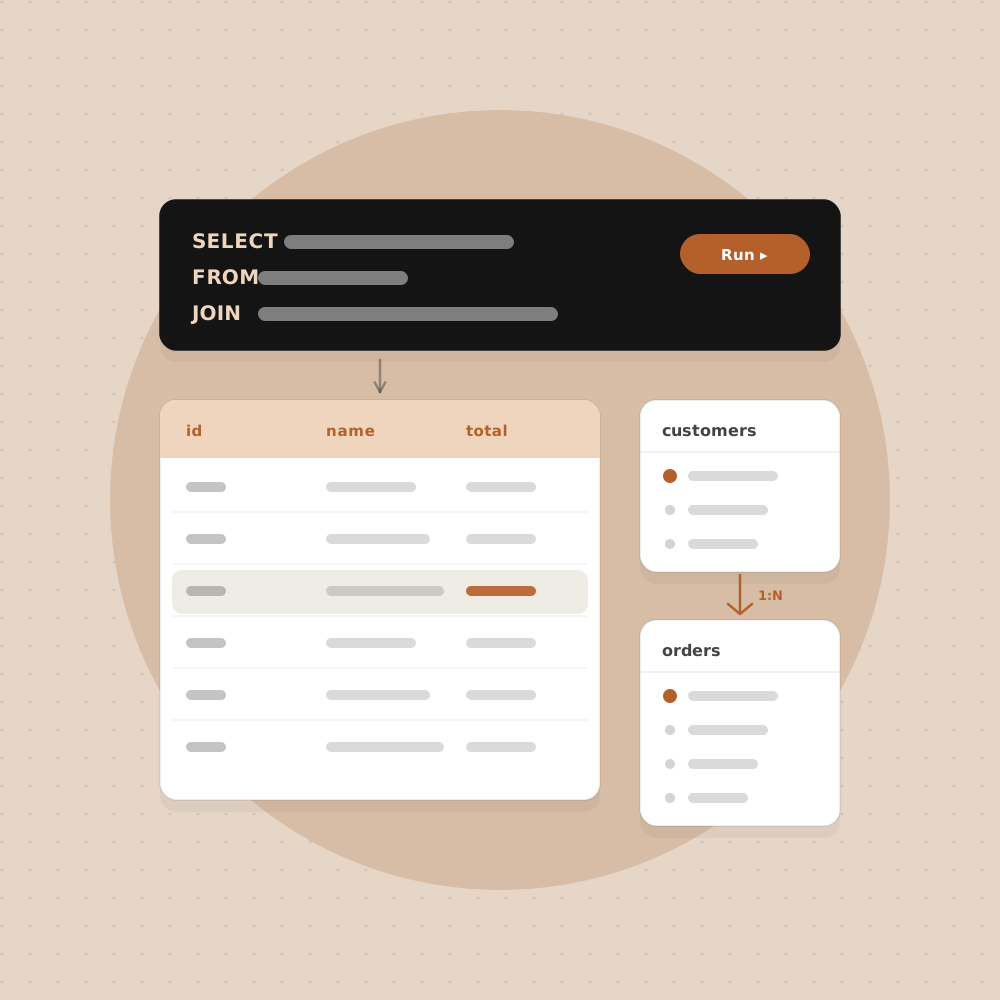
Tables, rows and columns, and retrieving exactly the data you need.
Summarise data with GROUP BY, HAVING and aggregate functions.
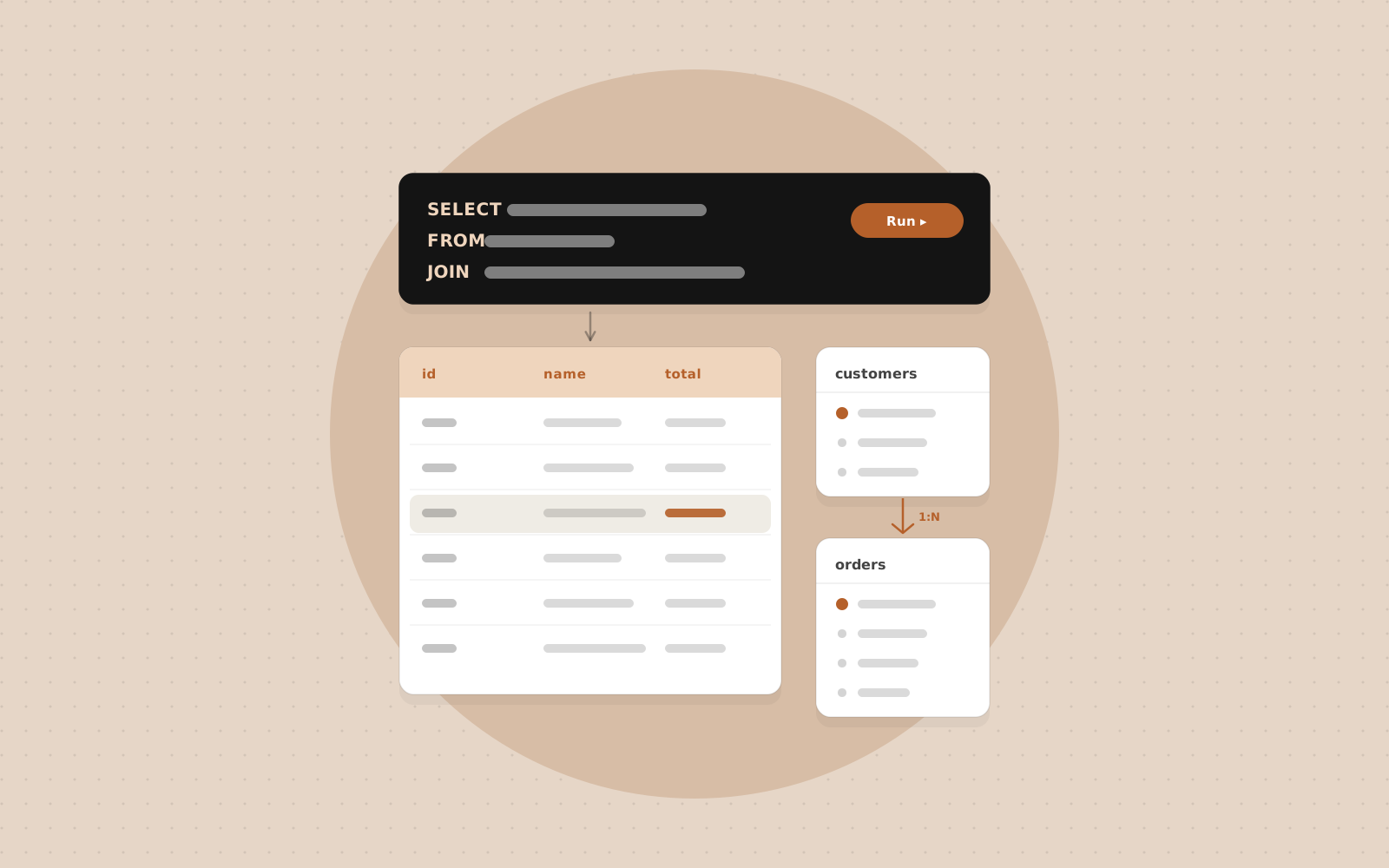
Combine tables and nest queries to answer real business questions.
Rankings, running totals and readable multi-step queries.
Model a domain, normalise it and enforce rules with constraints.
Tune performance and design a complete database for a real-world brief.
Tools You'll Use
PostgreSQL
A powerful open-source database trusted by teams of every size.
MySQL
One of the world's most widely deployed relational databases.
DBeaver
A free, cross-platform client to explore schemas and run queries.

FAQ
Both. Developers learn schema design and performance; analysts learn the analytical SQL used in reporting.
No. SQL is a great first language, and we start from the basics.
Mainly PostgreSQL, with MySQL differences covered so you can work with either.
Yes. Exercises use realistic sales, product and customer datasets.
Related Courses

React Native Mobile Development
Build and publish iOS and Android apps from one codebase with React Native and Expo.
Learn more
System Design
Design scalable, reliable systems and explain your decisions with confidence.
Learn more
AI Engineering
Build production AI features with LLMs, RAG, agents and evaluation.
Learn more