


React Development
Think in components. Ship interfaces people enjoy using.
React powers the interfaces of startups and global products alike. This course takes you from your first component to a production-ready Next.js application, with the habits that make React code easy to read, test and change.
You'll learn by building: every module ends with a feature added to a real project, reviewed by a mentor who writes React for a living. By the end you'll understand not just how hooks, state and server components work, but when to reach for each one.
Enroll nowWhat You'll Learn
Practical skills taught through real projects, reviewed by mentors who use them at work every day.
Components & JSX
Compose interfaces from small, reusable components and pass data cleanly with props and children.
State & Hooks
useState, useEffect, useReducer and custom hooks, and the mental model that keeps them predictable.
Routing & Data Fetching
Client and server data loading, caching, loading states and error boundaries in Next.js.
Forms & UI Patterns
Controlled forms, validation, modals, lists and accessible interactive patterns users trust.
Testing
Component and integration tests with React Testing Library, so you can refactor without fear.
Performance
Rendering behaviour, memoisation, code splitting and the React Compiler, measured with real tools.
Curriculum
Modules, destructuring, async/await and array methods: the JavaScript you'll use in every component.
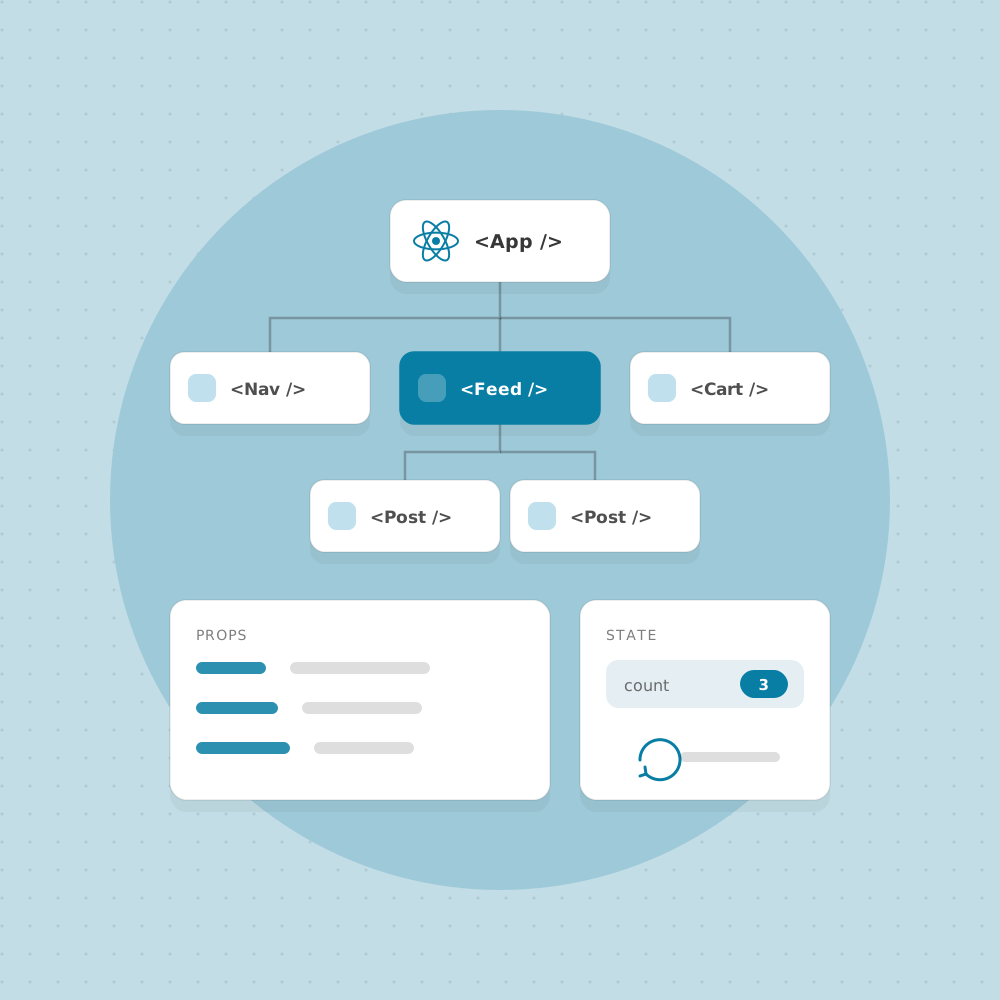
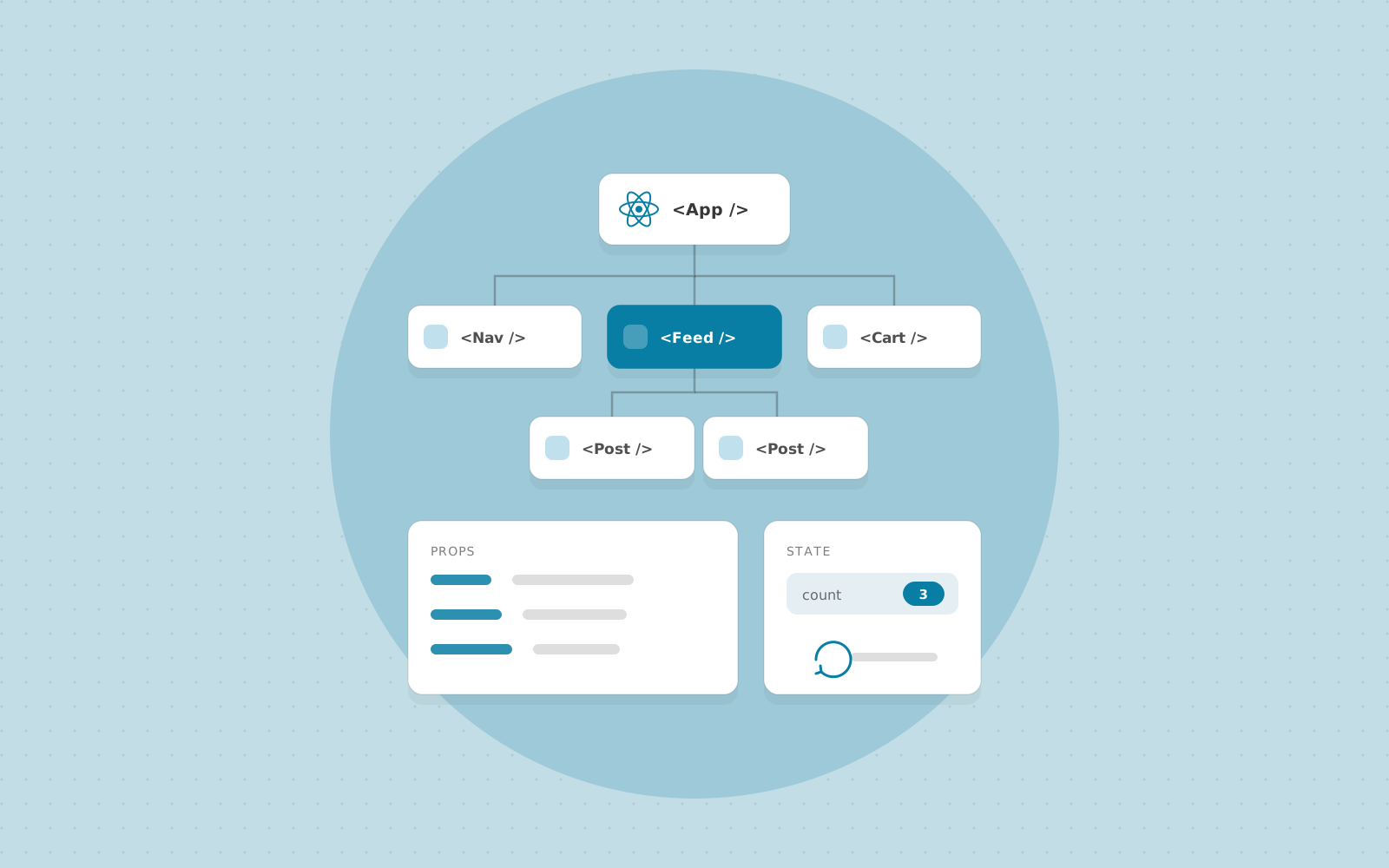
Break a design into a component tree and build it with clean, composable pieces.
Manage local state, respond to user input and synchronise with the outside world correctly.
File-based routing, layouts, server and client components, and static versus dynamic rendering.
Fetch and mutate data, handle forms and validation, and show helpful loading and error states.
Write tests that give confidence, then profile and fix the slow parts of your app.
Design, build and deploy a full React application, then present it in a mock code review.
Tools You'll Use
React 19
The latest React, including hooks, transitions, server components and the React Compiler.
Next.js
The most widely used React framework for routing, rendering and deployment.
TypeScript
Typed components and props that catch mistakes before your users do.

FAQ
You should be comfortable with basic JavaScript: variables, functions, arrays and objects. The first module refreshes the modern features React relies on.
Both. You'll learn React fundamentals first, then build and deploy with Next.js, the framework most React teams use in production.
Several smaller projects and one capstone application deployed to the web, with source code you can show employers.
Live sessions with a mentor, plus recordings of every session so you can revisit any topic.
Related Courses

Frontend Development
HTML, CSS and JavaScript from the ground up, the foundation every web developer needs.
Learn more
Backend Development
APIs, authentication and servers with Node.js, built the way production teams build them.
Learn more
MongoDB
Model, query and scale document data with MongoDB, from schema design to aggregation.
Learn more